Finnish Regulatory Shifts Prompt Integration of Live Event Odds with Draw-Based Mechanics in Nordic Mobile Platforms
Kirjoittanut Sage Lang · 27.10.2026
Finnish Regulatory Shifts Prompt Integration of Live Event Odds with Draw-Based Mechanics in Nordic Mobile Platforms
Regulatory Updates Take Effect
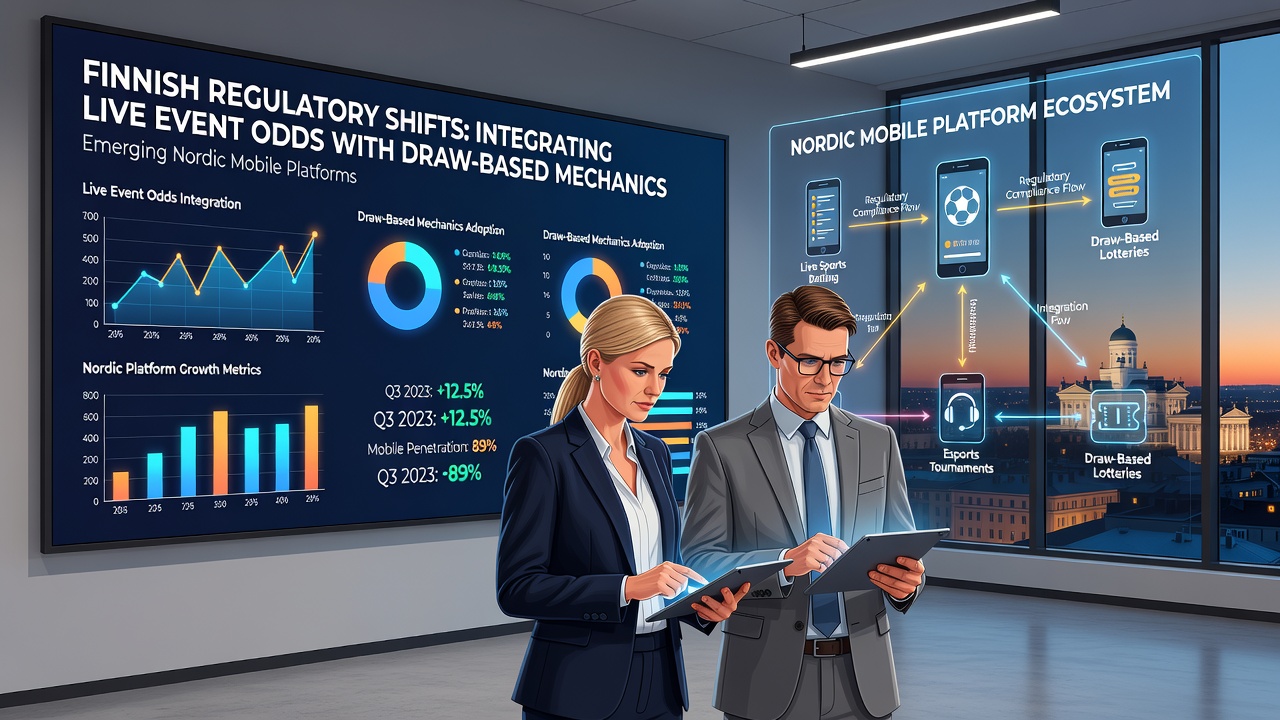
Finland introduced new licensing frameworks in October 2026 that expanded operator permissions for hybrid gaming products, and these rules directly addressed the separation between live betting markets and scheduled draw formats that previously operated under distinct compliance categories. The Ministry of the Interior published implementation guidelines that required platforms to maintain transparent odds calculation when live event data feeds interacted with random number generator sequences from draw mechanics. Operators responded by developing unified interfaces where users could place wagers on ongoing matches while participating in interval draws that adjusted payout multipliers in real time.
Data from the Finnish Institute of Occupational Health indicates that mobile gaming sessions involving multiple mechanics increased by 18 percent during the first quarter after the October 2026 rollout, while separate tracking from the Nordic Council of Ministers shows similar patterns across Sweden and Denmark as cross-border operators aligned their systems with the updated Finnish standards.
Technical Integration Patterns
Emerging platforms built API connections that pulled live sports statistics into draw result engines, allowing a goal scored in a football match to trigger coefficient changes for the next keno or bingo round without requiring users to switch applications. Developers documented these linkages in technical specifications submitted to regulators, and the process ensured that random draw outcomes remained independent while incorporating contextual multipliers derived from live event probabilities.
One case involved a Helsinki-based developer that connected a basketball league data stream to a five-minute draw cycle, and the resulting system recalculated ticket values based on player performance metrics while preserving the underlying draw fairness certification. Industry reports note that such integrations reduced latency to under 800 milliseconds on 5G connections, which enabled seamless transitions between live odds displays and draw participation screens.
Platform Adoption Across the Region
Operators in Norway and Iceland adapted their existing mobile applications to match the Finnish model after observing early compliance data, and several launched beta versions that combined football live odds with national lottery draw mechanics by late 2026. The approach allowed users to maintain a single account balance across both formats, which simplified transaction logging required under the new regulatory reporting standards.
Research conducted by the University of Oslo examined user navigation patterns on these hybrid platforms and found that session duration extended when live event updates appeared alongside draw result histories, though the study emphasized that this observation came from aggregated anonymized data rather than individual behavior tracking. Platforms incorporated visual indicators that distinguished live odds movements from draw-based adjustments to meet transparency obligations set by Finnish authorities.
Compliance and Data Requirements
The October 2026 regulations mandated that all integrated systems undergo third-party audits every six months, and auditors verified that draw randomness certificates remained unaffected by live event inputs. Companies submitted detailed flow diagrams showing how odds feeds entered the system and how draw results influenced display elements without altering core probability structures. Figures released by the European Commission’s gaming policy unit reveal that Finland processed 47 new hybrid product applications within the first four months of the framework’s activation.
Operators also implemented user-facing disclosures that explained when live data influenced multiplier values, and these notices appeared both in application interfaces and in downloadable rule documents. The requirements aligned with broader Nordic efforts to standardize reporting across jurisdictions while allowing each country to maintain its own licensing thresholds.
Conclusion
Finnish regulatory developments effective from October 2026 established clear pathways for combining live event odds with draw-based mechanics on mobile platforms, and subsequent adoption across Nordic markets followed documented compliance patterns. Technical implementations preserved independent random processes while enabling contextual updates, and regional data collection efforts continue to monitor session metrics and audit outcomes as the frameworks mature.